
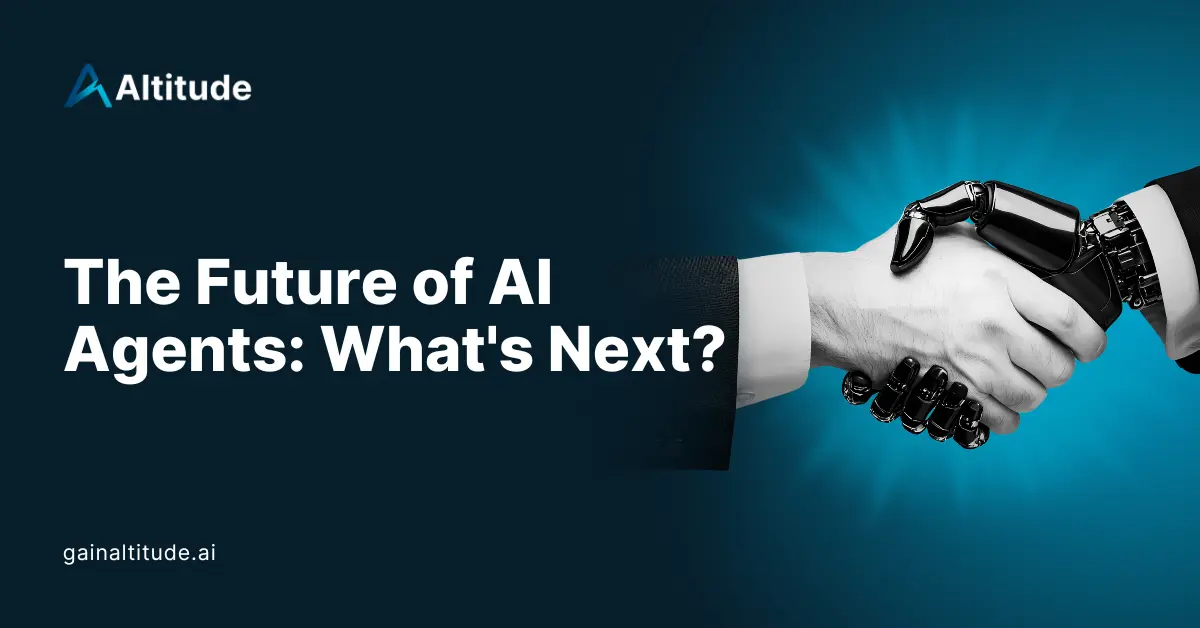
In the future, business will look like a very different place.
Your devices will be more connected than anything we’ve imagined before. Operating systems won’t matter for compatibility. What will matter are speed, power, and the ability of AI systems to deliver real-time assistance. Your preferences will be known, your workflows will be optimized, and your digital experience will feel like it was built just for you.
This is the stuff of sci-fi movies, because we’re now living in the phase of artificial intelligence that is leading us into the future we saw in the 80s and 90s, hopefully without the dystopian background.
Why the Future Starts Now
It starts with data and connectivity. But not just the internet, or massive databases holding information about your income, net worth, or buying habits.
The real shift is in AI-powered automation and the evolution of AI agents trained on specific domain expertise. These large language models (LLMs) are being refined and orchestrated into agent systems capable of true decision-making. They don’t just respond. They reason, collaborate, and act.
At Altitude, we’re moving in this direction with Pathfinder, our AI assistant designed to streamline your day-to-day workflows. It learns from your behavior, suggests actions, and automates functions that used to take hours. Pathfinder represents a glimpse of the future of AI agents, where human-agent collaboration becomes second nature.
From APIs to AI Agents
Today, your tech stack communicates through software development conventions like APIs. Your CRM sends a request to another system, which responds, and data syncs. It’s efficient, but it’s not intelligent.
Soon, even that kind of end-to-end API exchange will feel old school. A new layer of communication is emerging, one designed for generative AI, where bots and chatbots understand intent, context, and meaning.
In this new ecosystem, AI models will interpret both structured data and natural language, allowing agents to collaborate more fluidly. APIs will still exist, but they’ll act more like plumbing within a smarter AI orchestration framework, connecting everything beneath the surface.
This shift is a fundamental disruption, and it’s already happening.
The Real-World Impact
Imagine a near future where your phone is simply your access point to a personal AI agent. That agent communicates with others across an AI ecosystem, each one built by companies like OpenAI, Microsoft, or innovative startups rethinking how machine learning applies to everyday life.
You say, “I’m picking coffee up on my way to work.”
Your agent already knows your route, your preferences, your sleep data, and your schedule. It’s not just a copilot. It’s a human-agent system that anticipates your needs.
“Okay, Frantz,” it replies. “Today feels like a quad-shot caramel macchiato kind of morning. Starbucks across the street, right?”
You laugh. “You know me too well.”
That’s the user experience of the future: conversational, intuitive, and orchestrated seamlessly through AI tools working behind the scenes.
How These Interactions Transform the Future of Work
Behind that simple interaction lies a network of AI experts, business leaders, and developers building agentic ecosystems that redefine how digital work happens.
Your agent connects directly with Starbucks’ own AI agent, handles payment, schedules pickup, and confirms the details. There’s no need for multiple apps or manual inputs. Automation handles it all.
These new use cases go far beyond coffee orders. Think of customer support systems that understand tone and urgency, LinkedIn agents that optimize your professional outreach, or podcasts summarized by your AI copilot – giving you only the necessary top-level information without the fluff.
The more we connect these intelligent systems, the more we streamline business operations and improve the future of work.
The Future Is Closer Than You Think
Soon, AI agents won’t just support us. They’ll collaborate with us. They’ll integrate real-world context with machine learning insights to optimize everything from task management to strategic planning.
This isn’t about replacing humans. It’s about enhancing human judgment with smarter tools, clearer outputs, and built-in safeguards that ensure accuracy and transparency.
At Altitude CRM, this belief guides everything we build.
We see AI agent systems not as a trend, but as the natural evolution of artificial intelligence in wealth management, one that turns fragmented data into meaningful action.
This is the world we’re creating with Pathfinder AI: a connected, AI-driven ecosystem that helps financial advisors make better decisions, strengthen relationships, and achieve more than ever before.
That’s not just the future of AI agents. That’s the future of work.